
In 2025, I participated in a reconstruction support mission to Ukraine, organized by Japan’s Ministry of Economy, Trade and Industry (METI), Ministry of Foreign Affairs, and JETRO. I wrote about that experience in “A Business Travelogue from Wartime Ukraine.”
The visit opened the door for a new collaboration with companies and universities in Central and Eastern Europe, particularly in Ukraine, Poland and Lithuania, leading COGNANO to launch an AI-driven drug discovery business with the support from the Japanese government. While making several trips over the past year to these countries to expand our business network, I had the second opportunity to take part in the support mission to Ukraine.
Last year’s trips were journeys defined by meaningful encounters. These encounters enabled COGNANO to build relationship with government officials and business leaders in these countries. I’m particularly grateful to our Ukrainian partners, many of whom took the trouble of coming all the way to Warsaw for business discussions, sparing me the safety concerns associated with traveling deeper into their territory. Over the last year, COGNANO has held numerous online meetings with those partners. While these meetings were valuable, they were not sufficient to cover every aspect of the partnership. Face-to-face meetings were definitely needed to finalize the preparations and ensure that everyone was on the same page.
The object of this year’s trip was straightforward: to hold kick-off meetings and set our business collaboration in motion. Our destination was Lviv, a historic city in western Ukraine, near the Polish border.
Crossing the Border
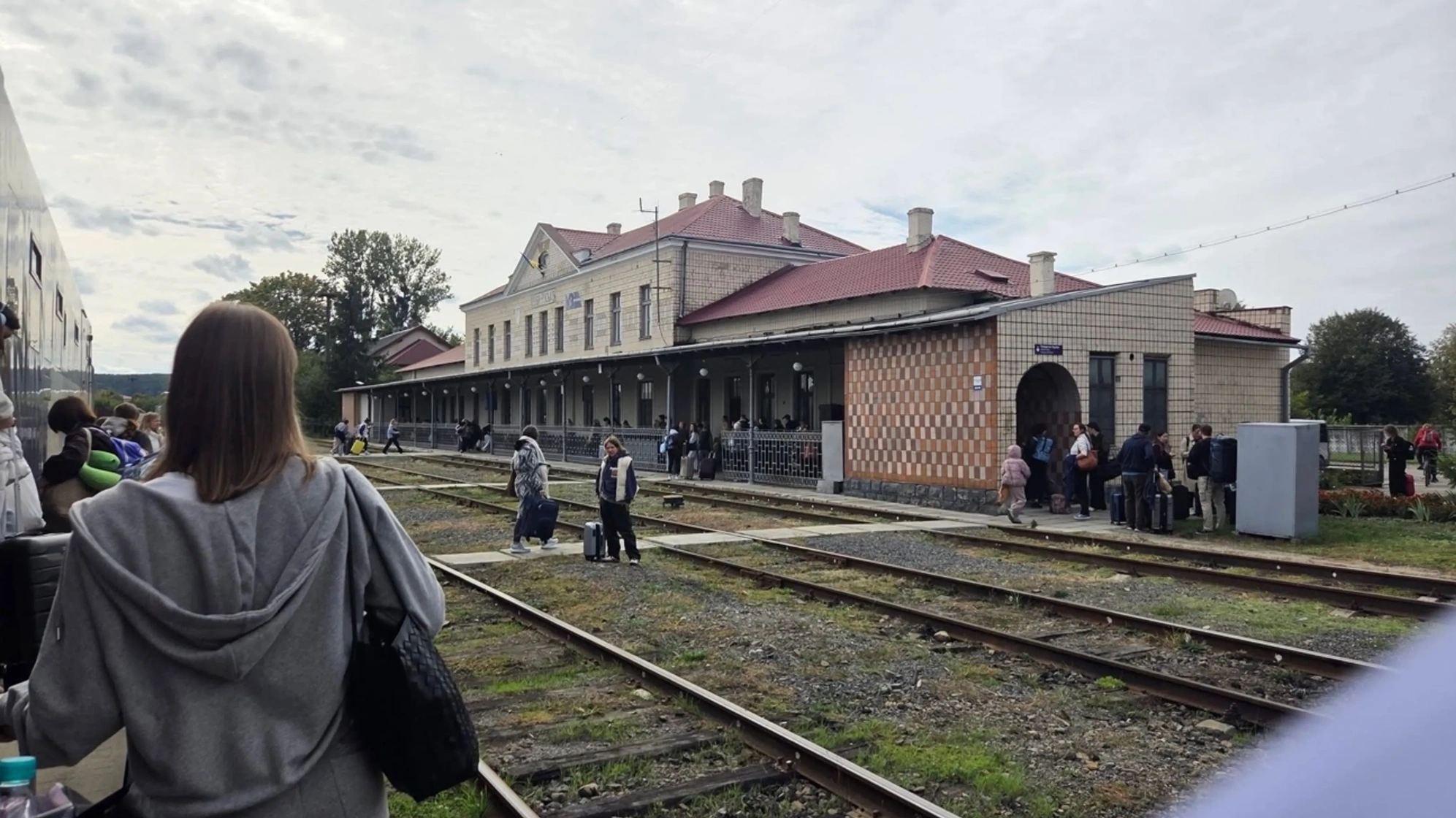
Accompanied by Mr. Takahashi of Deloitte, who has built a long and successful business career in Russia and Ukraine, my wife and I set off Warsaw East station early in the morning and headed for the Ukraine border by train. After leaving the station, the train sped straight across the beautiful Polish countryside, cutting through vast stretches of farmland, At the border crossing, Polish officers checked our passports while we remained seated in our carriage. We then crossed into Ukraine, and soon arrived at Rava-Ruska station, where we underwent customs inspection. Apart from a simple question about the purpose of our visit, we passed through without any difficulty. Nearly all the passengers were Ukrainians, and 90 percent of them were women. After waiting for about two hours, we transferred to a diesel train rather than an electric one, and continued our journey to Lviv on the train that traveled at a modest speed.
At Lviv National University
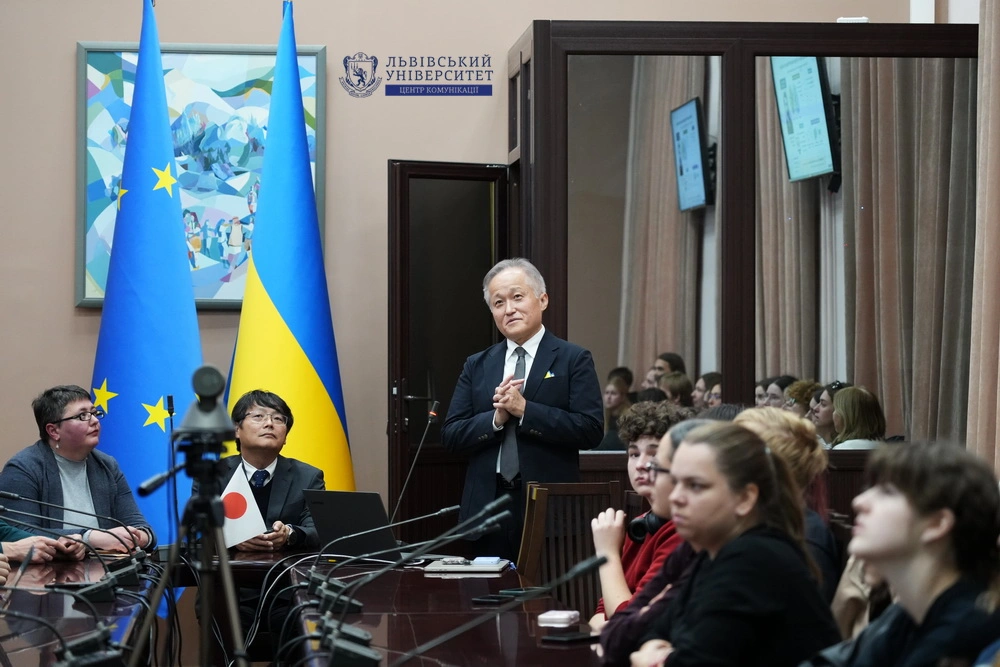
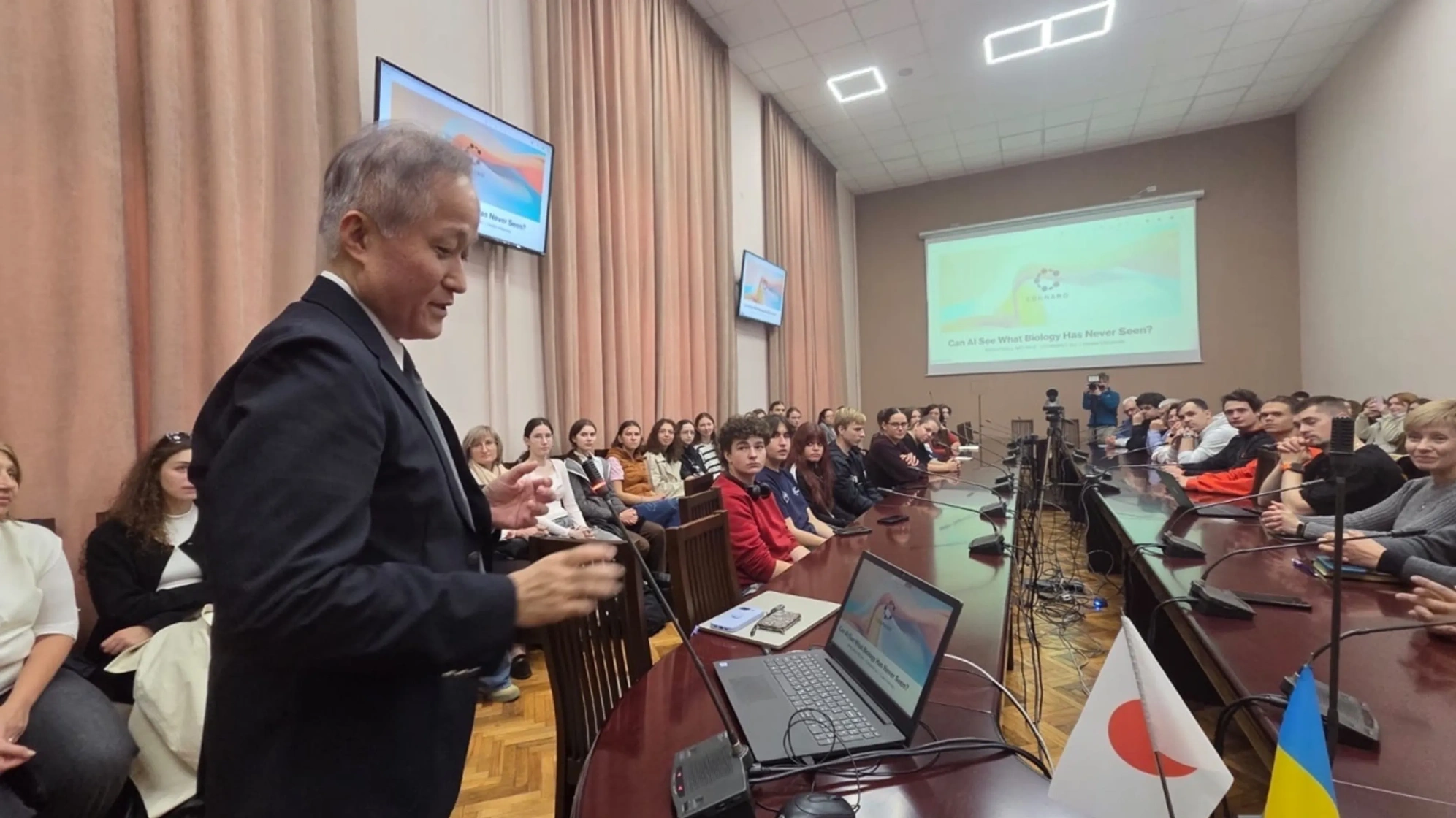
With guidance of the Lviv Japan Desk, JETRO, the Embassy of Japan in Ukraine, and Deloitte, I gave a seminar at Lviv National University (LNU) entitled “How Can AI See What Biology Could Not?” We also signed a memorandum of understanding (MOU) on a joint business initiative.
 https://lnu.edu.ua/en/discussion-on-how-artificial-intelligence-is-changing-the-approaches-to-drug-development-took-place-at-the-university/
This time, I came with a story that I especially wanted to share with the Ukrainian audience.
Georgy Voronoy, known in Ukrainian as Heorhii Voronyi, was a mathematician born in 1868 in a Polish village in the Poltava region, which is now part of Ukraine. After studying in Saint Petersburg, he became a professor at the University of Warsaw. For the rest of his life, he devoted himself to the study of a geometric method for partitioning space into distinct regions.
Place a number of points in space, and divide the space according to which point is closest. The result is a collection of cells, one for each point, that fits together perfectly without gaps or overlaps. This structure, developed more than 120 years ago, is known as Voronoi diagram, or Voronoi tessellation. Today, Voronoi diagrams are used in countless applications, from designing mobile phone networks to planning cities. What an elegant idea!
If we treat those points with atoms, we can determine inside a protein which neighboring atoms a given atom contacts, and the area of these contacts. This provides a mathematically precise view of atomic interactions on an abstract geometric plane.
Dr. Kliment Olechnovič of Vilnius University in Lithuania has transformed this idea into a powerful algorithm for structural biology. His software, Voronota, represents individual atoms as spheres of varying sizes and uses Voronoi tessellation to calculate the contact surfaces between them. The algorithm has been used to evaluate models that predict atomic-coordinate in CASP, the international competition assessing the accuracy of protein structure predictions. The latest version, Voronota-LT, is reported to perform these calculations more than a hundred times faster than earlier versions. The technology is of great interest to SEPIQ and COGNANO, because it provides a clear and quantitative view of antibody–antigen interfaces, revealing where the molecules make contacts and how extensive those contacts are.
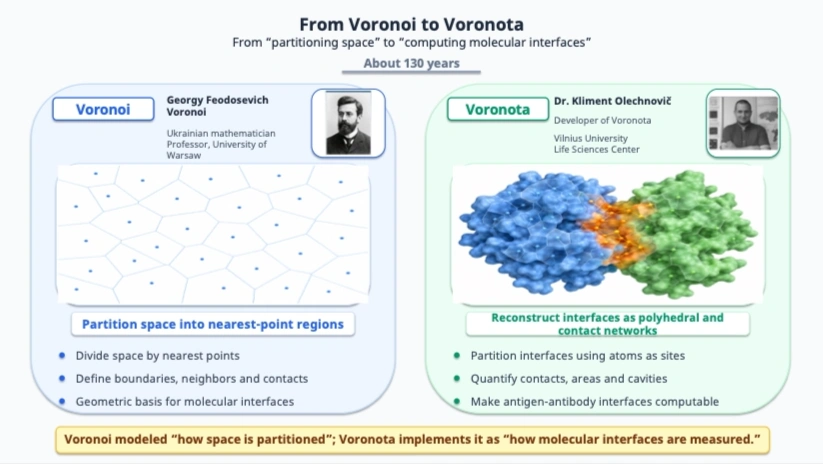
From Voronoi to Voronota. From the mathematics of dividing space to calculations measuring molecular interfaces. About 130 years. Voronoi: Georgy Feodosievich Voronoi, then a professor at the University of Warsaw. Space is divided into regions nearest to each point; boundaries, neighbors, and contacts are defined. This provides the geometric foundation for molecular interface analysis. Voronota: Dr. Kliment Olechnovič, Life Sciences Center, Vilnius University. Atoms are treated as spheres, and interfaces are partitioned and reconstructed as polyhedra and contact surfaces. Contacts, areas, and voids are quantified, making antibody–antigen interfaces computationally measurable. Voronoi modeled how to divide space; Voronota implemented that model as a way to measure molecular interfaces.
A geometric theory conceived in Poland some 120 years ago by a Ukrainian mathematician later evolved, in the hands of a Lithuanian scientist, into an AI algorithm for evaluating molecular interactions. In that sense, the idea originated in Ukraine, was developed in Poland, and brought to completion in Lithuania. These three nations are linked by mathematics, one of humanity’s greatest creations. Yet today, Central and Eastern Europe is threatened, divided, and scarred by war, another humanity’s creation. I was deeply struck by the fact that these two extremes of human endeavor: one that is profoundly creative and aspiring to even greater heights and the other that is profoundly destructive and heartbreaking, had emerged from the same region of the Great European Plain.
Prior to my second visit to Ukraine, I had a couple of concerns. Had this prolonged war made young Ukrainians more pessimistic about their future? Did they view biotechnology as a lost cause for their country amid the ongoing conflict?
As it turned out, these concerns were entirely unfounded. Throughout my lecture, the audience listened to me with earnest curiosity and challenged me with sharp questions. The discussion extended far beyond the scheduled timeframe, and we spent two and a half hours exchanging questions and ideas. COGNANO’s idea is difficult for people without a background in biology—although it actually is quite simple. Young Ukrainians’ keen interest in my lecture made me wonder whether they possessed a natural aptitude for biotechnology or they had carefully reviewed our website beforehand.
Here is one of the questions I was asked.
If AI hallucinates, how can we detect it?
My answer: Whether intentional or not, AI’s errors seem so convincing that I do not think humans can easily recognize them. But by designing experiments to verify AI-hypotheses, we should be able to uncover those errors. When the subject is a living system, nature itself becomes the ultimate fact-checker.
Incidentally, the distinction between real-world data and generated data lies at the very heart of COGNANO. Our bodies are not made of prompts; they consist of unstable, diverse molecules and cells. In molecules and cells that vibrate, proliferate, and disappear in an aqueous environment, information is extraordinarily layered and complex. Apart from the genome, very little of the hard molecular and cellular data about living organisms and disease has yet been digitized—even though AI requires an enormous amount of data. Now that AI writes code, innovation is becoming increasingly data-centric. Recent developments, such as Anthropic’s establishment of a wet lab, and AlphaFold creator Dr. John Jumper’s move from DeepMind, symbolize this shift.
After the seminar, the university’s communications team published an exceptionally accurate explanation. I would like to quote part of it here:
Traditional biological approaches, assisted by techniques such as cryogenic electron microscopy, can study protein molecules only in isolated or fixed states. Disease, however, develops dynamically within the human body, and this can lead to changes in the structure and functional state of individual protein molecules. Modern artificial intelligence has learned to model the general structures of ordinary proteins, but that is not enough to develop medicines. Scientists need to observe specifically the structural changes associated with pathological processes, such as aggressive forms of cancer.
COGNANO Inc. offered a distinctive approach: using antibodies obtained from alpacas—VHH antibodies, consisting of a single heavy chain—as tiny ‘natural biosensors’ that recognize the smallest changes in protein structures within living organisms. By collecting information on millions of antibodies, the company transforms biological knowledge into big-data libraries. Specially trained AI then analyzes these libraries, detects hidden protein regions associated with disease, builds universal models for antibody development, and helps develop personalized medical products at astonishing speed.
https://www.linkedin.com/posts/at-ivan-franko-national-university-ugcPost-7510994673474289665-WAUB/
The Business Forum and the Japan Desk
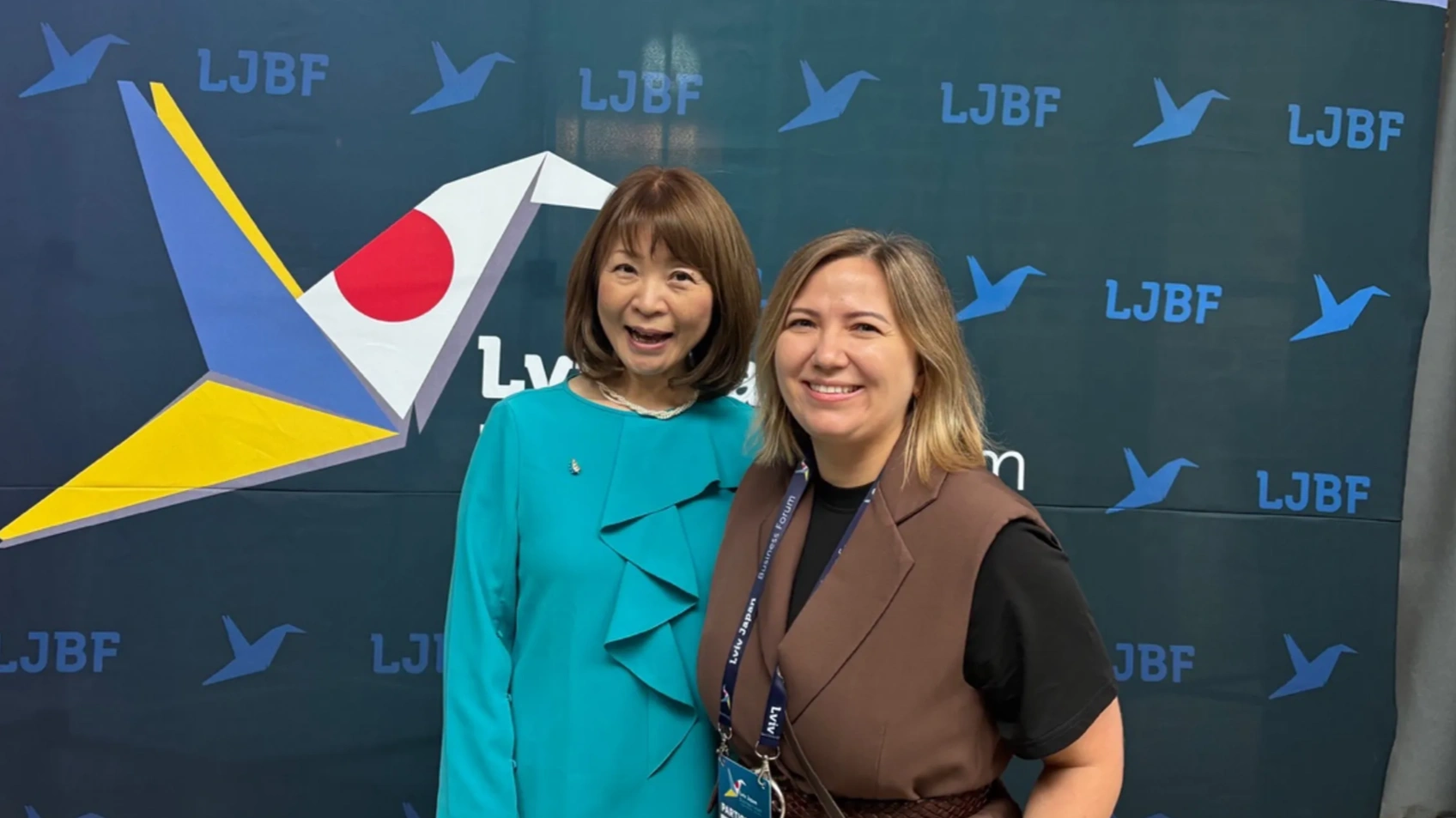
Yasuko Imura, one of our directors, delivered a speech at the Ukraine–Japan Business Forum. Around 400 business professionals from Lviv gathered to discuss the current state of industry in both countries and explored what could be achieved through closer partnership. AI drug discovery and computational biology still represent uncharted territory, offering significant opportunities even for latecomers. I would be delighted if these fields can lay a foundation for Ukraine’s future reconstruction. I wondered how much of our commitment to Ukraine had been conveyed through our words. In fact, a major Ukrainian IT company took an interest in the global AI drug discovery benchmarking competition hosted by COGNANO, and we have since entered into a business partnership. This experience brings home to me just how far the internet is expanding business opportunities across borders.

Last year, I sat in on the signing ceremony for establishing the Japan Desk, attended by the mayor of Lviv and Mr. Maekawa, then a JETRO executive director. Under the leadership of the city’s government, Lviv has set up contact points to attract investment and support from abroad, with Japan placed at the top of the list of target partners. It demonstrates how reconstruction efforts in Ukraine are moving forward in close cooperation with Japan’s public and private sectors even in the midst of wartime conditions. I was particularly surprised by the number of young Ukrainians who spoke Japanese fluently, not to mention English. Lviv University has a Japanese language department that produces a steady stream of motivated graduates who are ready to work for Japanese businesses. I believe this is the kind of information that deserves to be shared more widely throughout the Japanese business community.
A Reunion
We were able to catch up with Tetiana Boyko. She’s a working mother in Kyiv, and went out of her way to travel to Lviv to meet us. We happened to meet during the war in Kyoto when she visited Japan on her solo trip. We became good friends, and have tried sine then to meet whenever the opportunities arose. When we first met, she told us, ‘With the war still going on, and no end in sight, I needed a change of scene. That’s why I’ve come to Japan for a short sightseeing, which I had always dreamed of visiting.’ With her resilience and calmness, she seemed to embody the strength that I’ve come to associate with so many Ukrainians.
A City Determined to Carry On
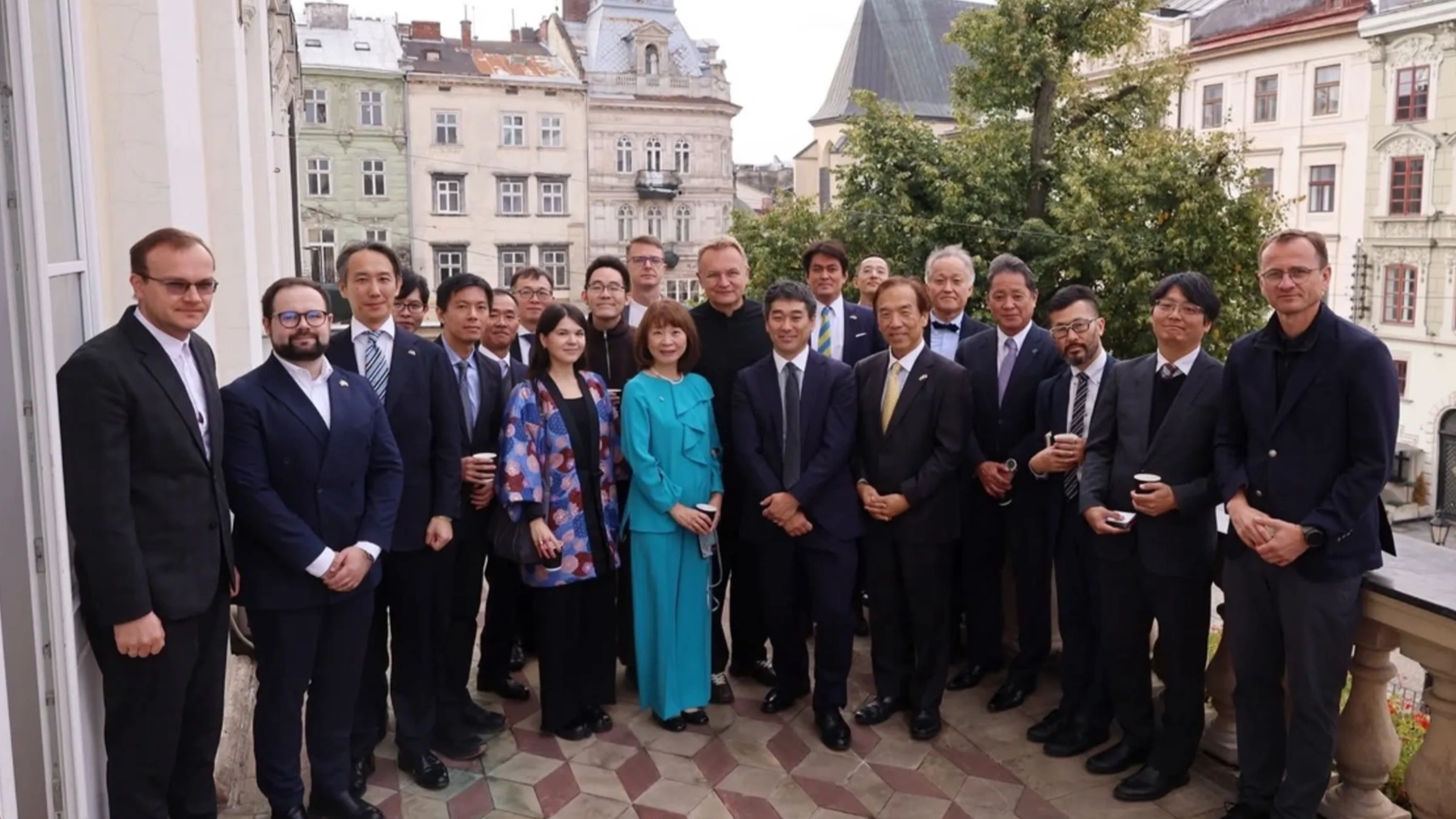
As on my previous stay, I came away with the impression that Ukrainian people were determined to endure this prolonged war with their heads held high, and maintain as much normalcy as possible in their daily lives. They seem keenly aware that if their industrial and economic activity were allowed to deteriorate too far, the consequences would be even more severe.
Meanwhile, air raids have intensified on the capital, Kyiv, and in the eastern part of the country, claiming many civilian lives. Despite the worsening security situations, Japanese diplomats remain stationed in the capital. An attack on an embassy is tantamount to a declaration of war against the country it represents, and, therefore, any intensive attack on the capital city would be unthinkable under normal diplomatic circumstances. Observing the dedication of the embassy staff under the relentless Russian attacks, I was struck by the fact that such work can only be carried out by individuals who had an extraordinary sense of duty and a deep commitment to both Ukraine and Japan.
One Thing I Want to Put into Words
In last year’s blog, I wrote that I would refrain from passing judgment on politics or the war. Even so, after this second visit, there’s one thing about Ukraine that I definitely need to mention.
Wherever you are in the city, everyone stops to observe a minute of silence at the call of nine a.m. every morning. It is a moment to remember the victims of the war and reaffirm their determination to persevere. Disputes over territory and sovereignty are deeply intertwined with history and identity. They cannot be resolved by one-sided arguments, much less by the use of military force. It is evident that most Ukrainians aspire to live under a political system different from Russia’s; few people wish to see their country become part of Russia or fall under its domination. Historical memories and the lasting consequences between Ukraine and Russia in the past undoubtedly contribute to Ukrainians’ determination to preserve their independence. One indication of this determination is the widespread preference for speaking Ukrainian rather than Russian.
Closing Thoughts
The connections we made only a year ago have already evolved into business partnerships. Our next step is to combine our strengths in data and bioscience with the outstanding expertise in IT and chemical sector in Central and Eastern Europe, and together expand into the global market. We hope to build a relationship based on true equality and work together as genuine partners.
Traditionally, the markets for biotechnology, drug discovery, and IT have been dominated by the United States and other advanced Western countries. This long-standing reality makes it all the more challenging for COGNANO to break into those markets, working hand in hand with the emerging powers in Central and Eastern Europe. COGNANO’s founding members have spent 30 years in Japan honing their expertise in biotechnology, a field that demands a tremendous amount of time, investment, and effort, always with the global market in mind. Along the journey, we unexpectedly discovered Central and Eastern Europe as our valuable partners. At first glance, it may seem surprising that nations once within the former Soviet sphere of influence, regions not commonly associated with drug discovery, become some of our most important partners. In these nations, though, COGNANO’s idea was readily embraced because each side brings something the other side lacks, making the partnership mutually complementary. Perhaps the trust Japan enjoys in these regions, rooted in historical ties dating back to the Russo-Japanese War and World War II, may have played a role. Alternatively, it was simply because Japan is the birthplace of their two favorites: manga and ramen.
To everyone at the Lviv Japan Desk, JETRO, the Embassy of Japan in Ukraine, and METI, and to our COGNANO colleagues who kept things running back home: thank you for all your hard work. And to the people of Ukraine, thank you. COGNANO will be back. Until then, stay safe!
Reference Links
Previous Blog Post
 https://cognanous.com/blog/ukraine-travelogue

JETRO
Updates from Japanese Embassies
Voronoi and Voronota
Author