
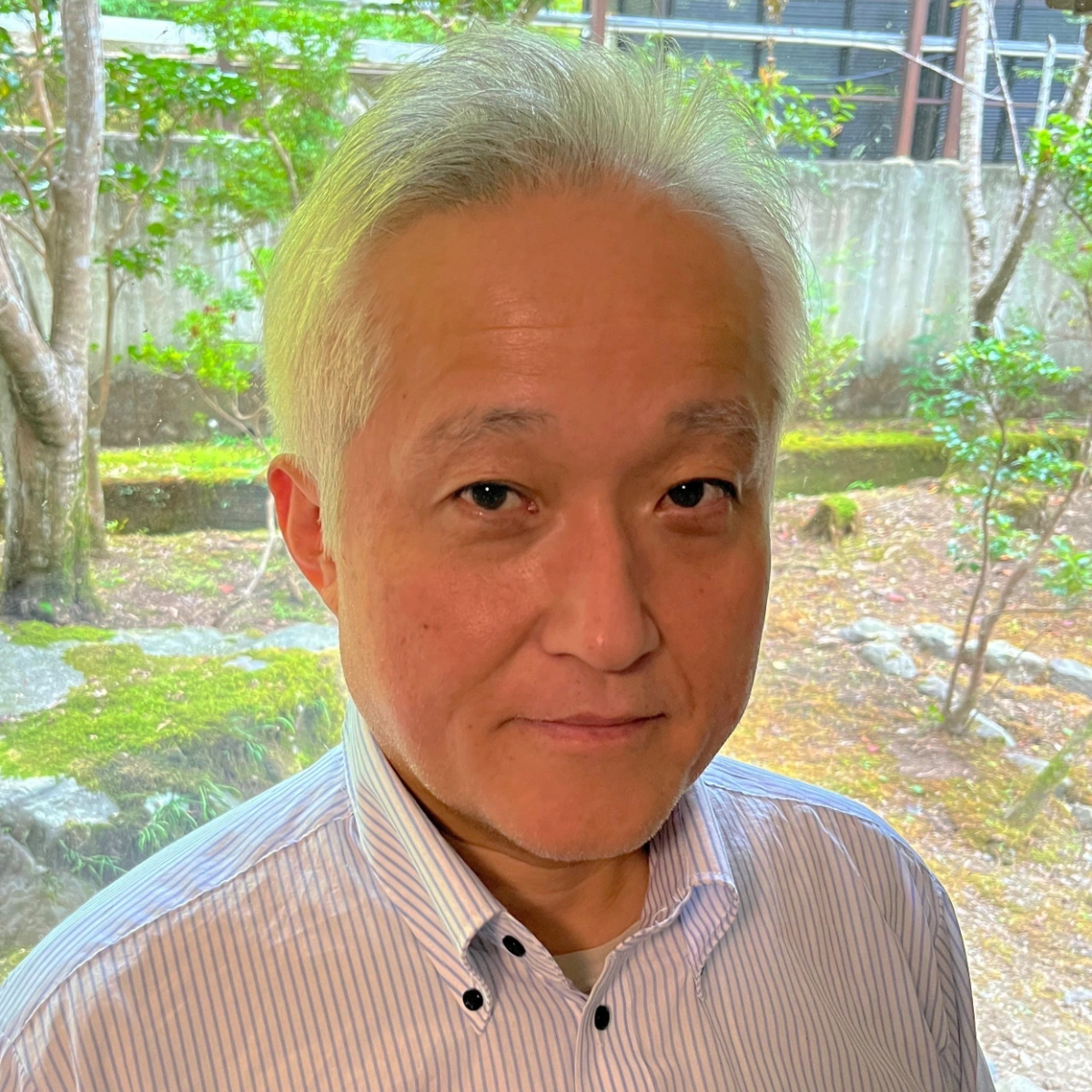
Hi, I’m Akihiro Imura, CEO of COGNANO. Today, I’d like to talk about the launch of SEPIQ (Sequence-Based Epitope Prediction Intelligent Query), our AI drug discovery evaluation committee, and my recent visit to Lithuania and Poland to lay the groundwork for our project under the Ministry of Economy, Trade and Industry (METI) subsidy program.
Support for Ukraine Recovery and Strengthening Cooperation
Last October, COGNANO had the honor of being selected for the METI FY 2024 Supplemental Budget Program: "Support for Ukraine Recovery and Strengthening Cooperation with CEE." Under this METI-sponsored initiative, we have embarked on a three-year international project.
The METI program, which is part of the Japanese government’s reach-out program for the Global South, aims to support efforts in Ukraine and neighboring regions made by Japanese companies to restore war-damaged infrastructure and energy supply in Ukraine.
We applied for the program with the conviction that "war-damaged infrastructure" extends beyond physical buildings and equipment. It also includes the human talent, medical, and biotechnological resources whose opportunities have been disrupted by the war. We see enormous value in creating opportunities for Ukrainian people and reconnecting them with the international market. In our view, enabling human and scientific recovery is just as essential to Ukraine’s long-term reconstruction as rebuilding its physical infrastructure.
Since participating in the government’s mission in Ukraine last July, we have been keeping our academic and industry partners updated on our progress as we prepare for the launch of the project.

Defining the "Global South" and Strategic Hubs
The concept of the "Global South" extends beyond countries in the southern hemisphere and, from an economic perspective, includes even parts of Eastern Europe. Within the program’s framework, the Baltic states and Poland are expected to play leading roles in supporting Ukraine’s recovery due to their geographical proximity.
Poland, which has become the largest host country for Ukrainian refugees, is a particularly important partner for our project. Participants in the program are expected to build business partnerships with CEE countries, create jobs, and develop new business models that will grow into organizations capable of generating profit within the next three years.
In line with government policy, COGNANO has established three key objectives:
- Recruit Top-Tier Talent: To demonstrate that a small Japanese firm like ours can thrive in the global marketplace by recruiting top-tier IT engineers from around the world, particularly from the Global South.
- Build Strategic Connections: To build strong connections with businesses, academia, and government institutions in Lithuania and Poland (particularly in IT and biotech), paving the way for greater Japanese business contributions to their economies.
- Global Expansion: To leverage this project as a springboard for expanding COGNANO’s services—which are ultimately focused on "drug discovery and health"—to markets worldwide, including the US, UK, and Western Europe.
Ukrainian Talent in Action for COGNANO
Our project is already off to a strong start, with a surge of applications coming in from Ukraine—well in line with our expectations. I’m pleased to report that COGNANO has already hired three top-tier Ukrainian IT engineers—Ihor, Oleksandra, and Anastasiia—along with another talent, Hiro, a PhD candidate from the University of Cambridge, UK.
This team directly supports our first objective, and together COGNANO is preparing to take on the ambitious challenge of becoming a game-changer in the field of AI-driven drug discovery.
Collaboration with IT Superpowers: Poland and Lithuania
To advance our second objective, we’re pursuing public-private-academic collaboration in both Lithuania and Poland.
- Lithuania: Inspired by the rapid digital development in its neighbor Estonia, Lithuania has emerged as an IT powerhouse and is now gaining strong momentum in the biotechnology sector.
- Poland: One of the true "rising stars" in Europe, driven by remarkable economic growth. Poland’s IT sector is a major engine of this progress:
- 25% of university students specialize in mathematics or IT-related fields (compared to 15% in Japan).
- Poland ranks 3rd in global IT skills according to HackerRank (Japan stands at 40th).
- While ChatGPT is an American product, it’s widely known that Polish researchers contributed to its core algorithms.
The tradition of technological excellence runs deep. During World War II, while British engineer Alan Turing led the effort to decrypt the Nazi Enigma code, his team included Polish mathematicians in exile whose earlier breakthroughs were essential to the project. Furthermore, as the birthplace of Marie Curie, Poland is a traditional powerhouse in chemistry. While the Soviet era slowed progress in biotechnology, Poland has recently invested heavily in biopharmaceuticals, building an advanced drug discovery ecosystem with direct access to the European Medicines Agency (EMA).
Launch of the SEPIQ World-Class Science Committee
As part of our third objective, we are launching SEPIQ (Sequence-based Epitope Prediction Intelligent Query), an international committee focused on evaluating AI-driven drug discovery. The task is to use computers to predict structural abnormalities in molecules closely related to diseases using amino acid primary sequence data.
 https://sepiq.uk/
To ensure global recognition and scientific excellence, COGNANO is honored to welcome two world-renowned leaders to our steering committee:
- Prof. Stephen K. Burley (Director of RCSB Protein Data Bank)
- Prof. Bernard Henrissat (Founder of the CAZy Database)
The global consortium OpenFold has agreed to co-host, and we are receiving support from AMED-BINDS (led by Program Supervisor Prof. Tsuyoshi Inoue). Additionally, Prof. Keiichi Namba of Osaka University will conduct cryo-electron microscopic analysis of antigen-antibody complexes.
We are also collaborating with CAPRI (Critical Assessment of Predicted Interactions). Dr. Kliment from Vilnius University, a leading scientist in computational biology and the creator of "Voronota," will serve as a lead judge. Dr. Kliment is a legend in the structural biology community and, impressively, a Lithuanian judo champion—a master of both mind and body.

Visit to Poland and the Future of Drug Discovery
I recently visited AGH University and Jagiellonian University in Krakow to propose joint research using COGNANO’s VHH antibody big data. We also discussed research possibilities with the sarcoma and melanoma team at the Maria Sklodowska-Curie National Research Institute of Oncology.
I’d like to express my deep gratitude to METI for helping us develop a far-reaching business network, recruit top talent, and realize the launch of a world-class AI drug discovery forum.
From a broader perspective, all these initiatives are part of our effort to demonstrate the power of the "Fourth Principle of Drug Discovery"—Structural Bio-Drug Discovery—following genomics, proteomics, and single-cell analysis.
Please look ahead with great expectations as COGNANO steps onto the global stage, equipped with the full force of data science!
Start evolving. The 4th Wave of Drug Discovery starts here.